





Orthognathic Surgery Patient Information Handout
What is Orthognathic Surgery? Orthognathic surgery, also known as corrective jaw surgery, is a procedure designed to correct irregularities of the jaw and facial bones. This surgery helps improve jaw function, correct misalignment, and enhance facial aesthetics. It is often performed in conjunction with orthodontic treatment.
Why is Orthognathic Surgery Needed? Patients may require orthognathic surgery for:
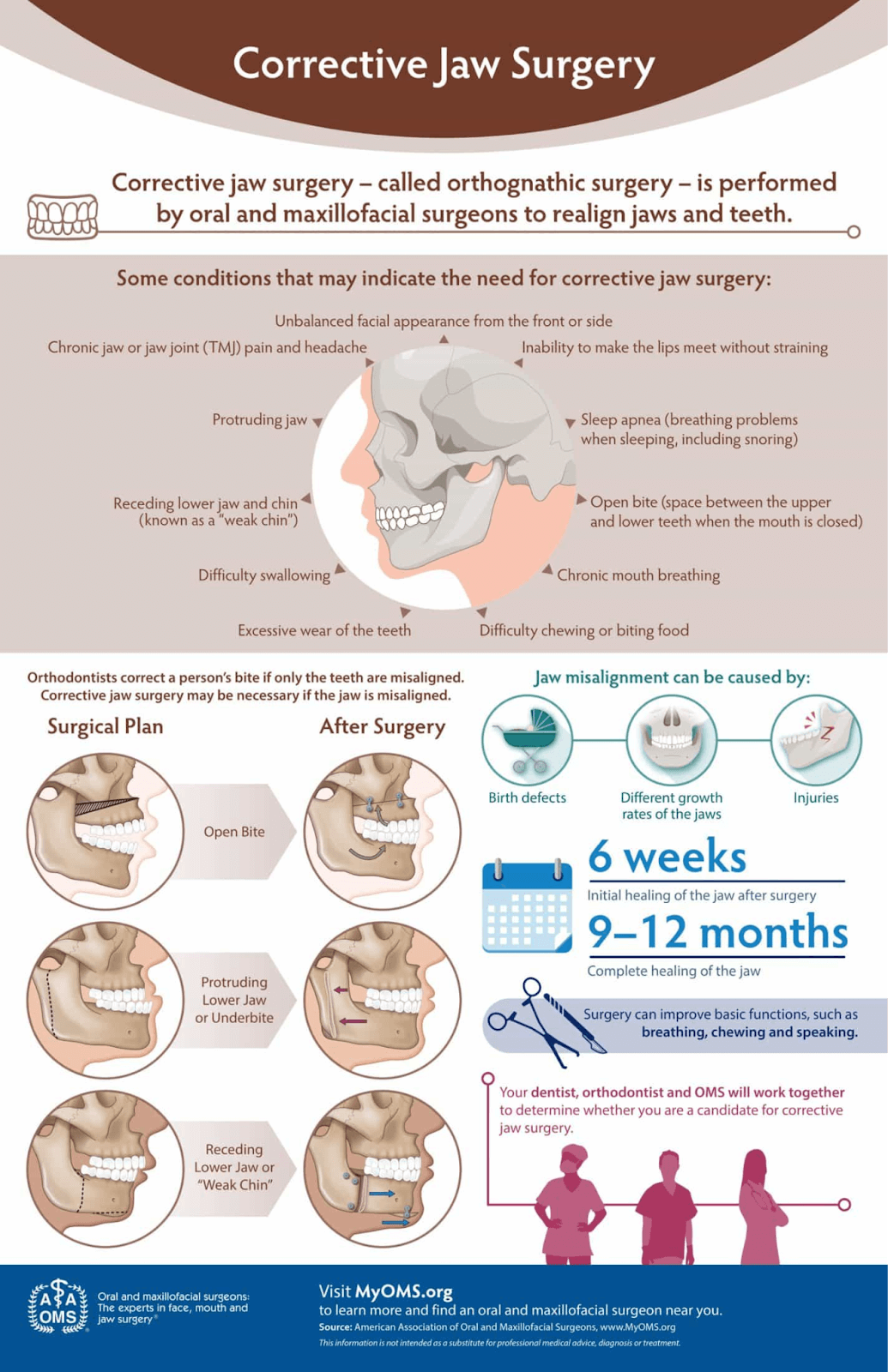
- Severe bite misalignment (overbite, underbite, or open bite)
- Difficulty chewing, speaking, or breathing
- TMJ (temporomandibular joint) pain or dysfunction
- Sleep apnea
- Facial asymmetry or disproportion
The Surgical Process
1. Pre-Surgical Preparation
- A thorough evaluation, including X-rays, 3D imaging, and dental impressions, is conducted.
- Patients may need orthodontic treatment for several months before surgery to align the teeth properly.
2. Surgery
- The procedure is performed under general anesthesia.
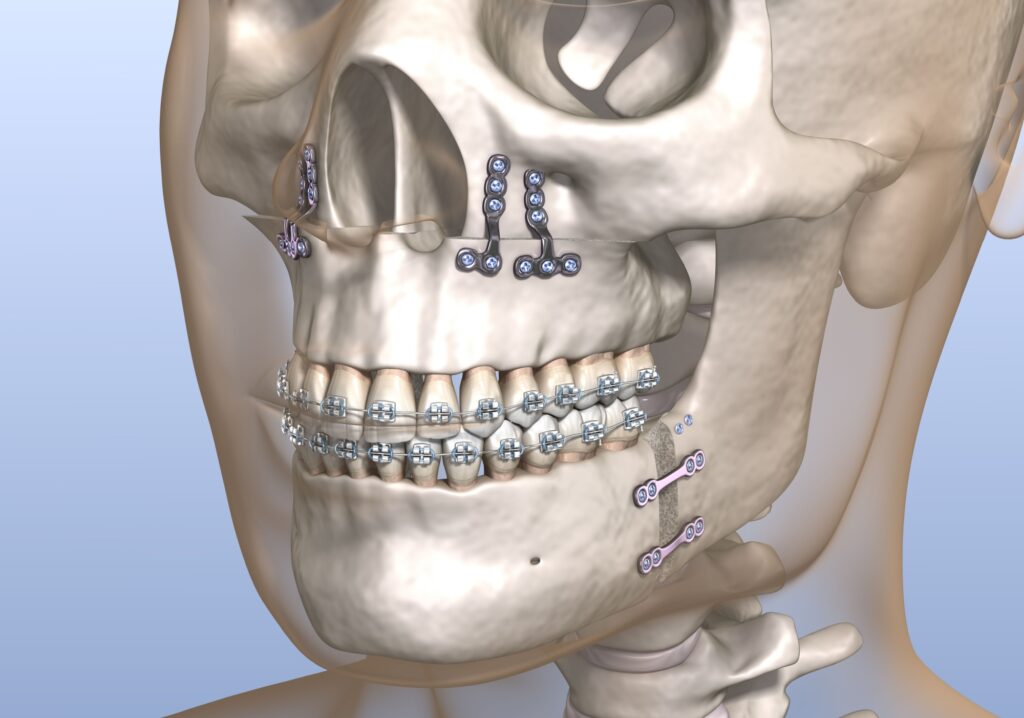
- The surgeon makes incisions inside the mouth to reposition the upper jaw, lower jaw, or both.
- Small plates and screws are used to stabilize the bones.
- Surgery typically takes 2-4 hours, depending on the complexity.
3. Post-Surgical Recovery
- You will stay in the hospital for one to two nights.
- Swelling and discomfort are common and may last several weeks.
- A soft-food diet is required for several weeks.
- Most patients return to normal activities within 6-8 weeks.
Post-Surgical Care
- Pain Management: Prescribed medications should be taken as directed.
- Oral Hygiene: Gentle rinsing and avoiding hard brushing around surgical sites.
- Dietary Restrictions: Stick to soft foods and avoid hard or chewy items.
- Follow-Up Visits: Regular check-ups with your surgeon and orthodontist to monitor healing.
Potential Risks and Complications Orthognathic surgery is a complex procedure, and while it is generally safe, there are potential risks, including:
- Swelling and Bruising: Common side effects that typically resolve within a few weeks.
- Numbness or Tingling: Temporary or, in rare cases, permanent nerve damage leading to altered sensation in the lips, cheeks, or chin. The nerve that innervates the lower lip is especially at risk. Many patients will experience temporary numbness in their lower lip but most will have a full recovery.
- Infection: Although rare, infections may require antibiotics or additional treatment.
- Changes in Bite or Jaw Function: Some patients may require further orthodontic adjustments or additional procedures to refine their bite.
- Jaw Relapse: In some cases, the jaw may shift slightly during healing, requiring monitoring and potential correction.
- Difficulty Breathing or Speaking Temporarily: Swelling may cause temporary airway obstruction or difficulty articulating speech.
- Blood Clots or Anesthesia Risks: As with any surgery, complications from anesthesia or blood clots can occur but are rare.
- Need for Revision Surgery: In rare instances, additional surgery may be necessary to achieve the desired result. While orthognathic surgery is generally safe, potential risks include:
- Need for further adjustments or additional procedures
What can Orthognathic Surgery Do For Me?
- Improved jaw alignment and function
- Enhanced facial aesthetics and symmetry
- Relief from jaw pain or breathing difficulties
- Long-term stability with proper post-surgical care
Frequently Asked Questions
Will I need braces after surgery?
- In most cases, orthodontic treatment continues after surgery to refine alignment.
How long will swelling last?
- Major swelling subsides within 2-3 weeks, but minor swelling may persist for several months.
When can I return to work or school?
- Most patients resume daily activities within 2 weeks but should avoid strenuous exercise for about 6 weeks.